Aviation Switching Module – NSN 4920-01-250-2696 (AS-IS / Untested): Aircraft Switching Equipment for Parts or Evaluation
Aviation Switching Module – NSN 4920-01-250-2696 (AS-IS / Untested): Aircraft Switching Equipment for Parts or Evaluation
Blog Article
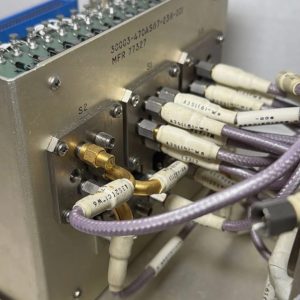
The Aviation Switching Module – NSN 4920-01-250-2696 (AS-IS / Untested) combines recognizable aviation hardware, an identifiable National Stock Number, potential electrical-control functionality, and commercial value for informed specialist buyers.
An Aircraft Switching Module may control, route, select, isolate, or distribute compatible electrical signals or circuits, while an Aerospace Switching Module should be evaluated according to its exact internal design and intended equipment relationship.
An Aircraft Electrical Switching Module can have commercial value for technicians, while an Aviation Electrical Control Module or Aerospace Electrical Control Unit requires qualified bench evaluation before operational consideration.
The Aviation Control Module, Aircraft Switching Unit, Aerospace Power Distribution Module, Aircraft Electrical Control Unit, Aviation Power Control Module, Aircraft Electronic Switching System, Aerospace Switching Unit, and Aircraft Electrical Module keywords describe a broad aerospace-electrical product category.
Identifying the Aerospace Switching Unit
A matching NSN can improve identification, but it does not establish present condition, functional status, completeness, or suitability for a particular aircraft or test system.
Military or aviation-surplus components may carry replacement numbers, superseded numbers, modification markings, or contract identifiers that assist research.
Buying an Untested Aviation Module
Internal faults, missing components, damaged wiring, corrosion, previous modification, storage deterioration, or electrical failure may be present even when the exterior appears clean.
Improper voltage, polarity, grounding, current, signal input, or connector pin assignment can damage the module and connected equipment.
Evaluating Aircraft Switching Functions
The product page should avoid assigning a cockpit, power-distribution, test-set, or mission-system function without evidence.
Missing knobs, guards, labels, connectors, covers, or fasteners may reduce completeness.
Aerospace Switching Module Construction
An Aerospace Switching Module may use a durable enclosure, secure connectors, internal wiring, switches, relays, terminal assemblies, circuit boards, or other configuration-specific components.
Proper connector protection preserves the Aerospace Switching Module for future testing or restoration.
Evaluating Aircraft Electrical Components
A qualified technician should determine whether additional internal inspection is justified.
The module should not be modified simply to produce a temporary power-on result.
Aviation Module Interface Considerations
Similar-looking modules may use completely different pin assignments and operating voltages.
Missing labels or faded markings can make operation difficult and may increase the risk of improper testing.
Choosing an Aircraft Power Switching Module
An Aircraft Power Switching Module may connect, disconnect, select, or manage compatible electrical power circuits when get more info designed for that function.
Missing covers or barriers may expose conductive points and increase handling risk.
Aerospace Electrical Control Unit Evaluation
Its internal design may include electromechanical components, solid-state devices, wiring assemblies, circuit protection, or specialized connectors.
Replacement components should match the required electrical, mechanical, thermal, and environmental characteristics of the original design.
Signal Switching Module Inspection
The pinout and signal type should be confirmed before continuity or injection testing.
Original cable assemblies may add significant value when included.
Control Module Compatibility Review
Associated wiring, power supplies, interfaces, switches, displays, sensors, test sets, or aircraft equipment may be required for meaningful operation.
Accurate configuration review reduces the risk of an unsuitable Aviation Control Module acquisition.
Aircraft Test and Support Equipment
Its value depends on identity, completeness, cosmetic condition, connector integrity, internal status, rarity, and availability of documentation.
Removable demonstration leads or external training fixtures may preserve originality better than permanent alteration.
Aerospace Power Distribution Module Considerations
A module should not be loaded electrically until contact condition, insulation, wiring, and circuit configuration are understood.
Preserving the original structure protects the Aerospace Power Distribution Module and its resale value.
Aircraft Electrical Control Unit Inspection
Dust and surface dirt can often be removed carefully, but aggressive cleaning may damage labels, seals, finishes, or electrical parts.
Functional evaluation should proceed in stages, beginning with research and non-powered inspection before controlled electrical testing.
Choosing an Aviation Power Control Module
The NSN’s federal supply classification may provide useful context, but the exact role should still be researched through item-specific records.
Power-control components may retain electrical energy or contain circuits requiring special handling depending on internal design.
Maintaining Aerospace Switching Equipment
A single module removed from the system may not be testable through ordinary standalone methods.
A replacement AS-IS unit may provide useful comparative parts but should not be installed without evaluation.
Shipping Aviation Electrical Modules
The unit should not be stacked beneath heavy equipment or left on conductive surfaces.
Insured and trackable transportation supports responsible sales of specialized aviation hardware.
Aircraft Electrical Module Buying Considerations
A buyer seeking an operational replacement has different needs from a collector, technical school, parts dealer, or restoration specialist.
Remote buyers should request current photographs of the actual unit instead of relying on catalog images or pictures of similar equipment.
Untested Aviation Equipment Condition Checklist
A detailed review reduces misunderstanding and supports realistic purchasing decisions.
- Determine whether cables, plugs, manuals, test leads, mounting hardware, storage cases, or companion components are included.
- Inspect the enclosure for dents, cracks, corrosion, missing screws, altered holes, broken seals, damaged brackets, and signs of previous opening.
- Confirm the written invoice, AS-IS terms, payment protection, packaging method, shipping insurance, inspection period, and return conditions.
Professional Bench Evaluation
Testing should begin with identification research, visual inspection, connector mapping, safety review, and examination of available technical documentation.
Partial operation should not be presented as complete certification, calibration, or airworthiness.
Documenting Aviation Electronics Restoration
Restoration should begin with condition documentation, careful cleaning, technical research, component identification, fault isolation, and repair planning.
A repaired module may still require system-level testing or additional qualification before installation.
Final Thoughts on the Untested Aircraft Switching Module
The Aviation Switching Module – NSN 4920-01-250-2696 (AS-IS / Untested) offers stronger commercial appeal when its markings, controls, connectors, enclosure, accessories, history, and limitations are documented accurately.
Careful technical and commercial evaluation can reduce equipment damage, incompatible purchases, missing-accessory costs, testing hazards, and restoration delays.
Whether the product is described as an Aircraft Switching Unit, Aerospace Power Distribution Module, Aircraft Electrical Control Unit, or Aviation Power Control Module, AS-IS limitations should remain clear.
With responsible purchasing, NSN research, connector protection, current-limited evaluation, and documented restoration, the component can remain a useful aviation asset.
Report this page